Streamlining Lifecycle Data Management
Extract, Migrate, and Archive MEDITECH EHR Data.
MEDITECH is the third most popular EHR vendor in the U.S. Its newest release, Expanse, is earning high customer marks. As MEDITECH users upgrade to Expanse or move to a different EHR altogether, they need a trusted partner. Our team provides reliable, expert support for data extraction, conversion, and archival.
Harmony Healthcare IT is the industry’s most comprehensive MEDITECH data partner — with deep expertise across Magic, Client Server (C/S), M-AT (6.x), and Expanse — and associated data types/third-party software. We’ll work with you to create a best-practice driven strategy for data extraction, conversion, and archival.
Why Choose Harmony Healthcare IT?
20+ years
Experience with MEDITECH EHR modules, including clinical, lab, blood bank, pathology, general ledger, HR.
Integration
Single Sign-On archive integration with major EHRs, like MEDITECH, Oracle Health and Epic.
HITRUST Certified
Ensuring we meet the highest standards in data protection and security.
500+ Clients
Across the healthcare continuum trust our expertise in data management.
With You at Every Step
Develop a Strategy for Conversion and Archiving
Whether you are migrating to a new go-forward EHR and/or archiving data from a legacy MEDITECH system we help you create a strong data lifecycle management strategy at every step.
- When Migrating to a New EHR from MEDITECH:
Typically, we convert one to two years of clinical data to the selected EHR. The rest of the clinical data—along with historical enterprise resource planning (ERP), revenue cycle, and other system data—is extracted and consolidated into our active archive, HealthData Archiver®. The archived data is available to clinicians at time of care through secure Single Sign-On capabilities.
- When Retiring Legacy MEDITECH Systems:
We help you capture the details of the source systems you plan to retire. Our inventory tool logs legacy system details to help scope data extraction, migration, and retention. This includes identifying contract renewal dates, system static dates, and A/R wind-down plans to prioritize the order of system decommissioning.
Our experts can help guide your EHR change management planning and inform system decommissioning and data archive initiatives.
Our Team Will Work With You to:
- Support your data conversion to an upgraded MEDITECH or other EHR brand.
- Manage data from MEDITECH Magic, Client Server (C/S), M-AT (6.x), and Expanse.
- Extract, migrate, and archive data from MEDITECH and/or other legacy EHRs to ensure records are accessible, secure and compliant.
- Navigate the complexities involved in EMR View (PhysicianDesktop in V6) to ensure users have a familiar experience with archived records.
- Support innovative archive approaches for integrated systems like Hyland OnBase.
- Address challenges related to MUMPS (Massachusetts General Hospital Utility Multi Programming System) or file types such as MTA and MTDD.
A Trusted Partner for MEDITECH Projects
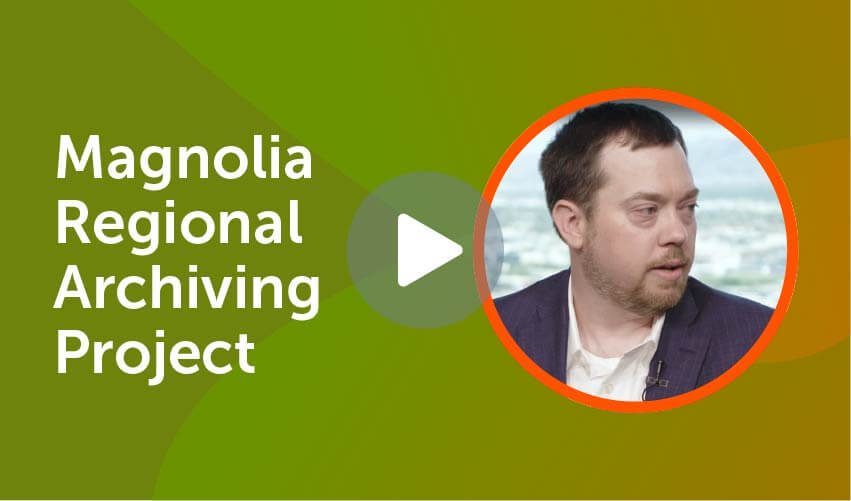
“During our EHR migration, we created a decision matrix for selecting a legacy archiving solution—Harmony ranked above all competitors.”
Brian Davis
CIO, Magnolia Regional Health Center

Magnolia was going through an EHR implementation. And in doing so, we were migrating off multiple ambulatory acute EHR systems. And so it left us with a lot of legacy data sitting out there in those solutions that we were really having some workflow challenges around. We really wanted to migrate all that data into a single platform that we could just provide some more efficient work flows for but also improve our cybersecurity stance and posture. In the process, we brought in a team of eight individuals that were really responsible for the data from the different systems that we were looking at. And so we developed a decision matrix that included all of the things that were really required from Magnolia in a legacy archiving solution. And the feedback from the group when we, we scored Harmony was above and beyond any of the competition that we looked at. The user interface and user experience was really great. It was easy to use, easy to navigate. It provided all of the real feature functionalities that we were looking for in a solution. One of the, I guess real differentiators for Harmony for us was the ability to work down AR and work with agencies. That was really truly needed for us and being a small organization to be able to get rid of those manual processes. And really streamline our, and give us some efficiency in our workloads. So I will say Harmony has an impeccable project management methodology. It’s been really refreshing to work with Harmony throughout this implementation. They do Q&A checks throughout the process. Their Project Managers stay on top of everything. Keep us moving right along to meet our deadlines. So it’s, it’s been a really great experience.
Why Archive Data?
Data Consolidation
By merging numerous legacy data silos into one secure archive, HealthData Archiver® enables secure, accessible, data storage via Single Sign-On from the go-forward EHR (MEDITECH or others).
Reduced Costs
Keeping legacy systems running quickly becomes expensive due to maintenance, licensing, backup, and other costs. Older systems are also vulnerable to security breaches.
Compliance
HealthData Archiver® complies with record retention mandates and supports interoperability requirements of the 21st Century Cures Act.
Better Than Backup
While a backup copy of your data may be secure, it lacks the necessary user workflows of an active archive like HealthData Archiver®.
FAQ
Your Top MEDITECH Questions—Answered
How much patient health data can we help migrate to MEDITECH?
The amount of data migrated can vary by customer depending on factors including source system data elements, MEDITECH configurations, and migration goals. Commonly migrated patient data includes demographics, clinical notes, active and past medical diagnoses, allergies, medication history, vaccination history, and laboratory results.
How will we ensure compliance with healthcare data privacy regulations (e.g., HIPAA, PIPEDA)?
Harmony Healthcare IT follows strict HIPAA and PIPEDA regulations and implements robust security measures to protect Protected Health Information (PHI). Here are some ways we ensure data is compliant and safe:
- Partitioning of sensitive information through role-based access controls
- Encryption at rest and in transit
- Audit logging/monitoring
- Data masking
- Third-party multi-factor authentication
- Strong password requirements
- Record access/amendment functionality
Will we perform health data and accuracy checks before migration to MEDITECH?
Yes. Data quality and accuracy are critical in any data migration or conversion project. Accuracy in data projects largely depends upon upfront expectation setting, clear requirements definition, business rule identification, data quality rules development, and establishing and adhering to field/data validation processes. Harmony Healthcare IT assigns a project manager to ensure accuracy in each step of the process. Data verification and validation occur from both parties to ensure accuracy in the migration of data from source to target systems.
What should healthcare organizations consider when upgrading or transitioning from a legacy MEDITECH system?
When moving from MEDITECH Magic, Client/Server, or 6.x to Expanse—or to a different EHR altogether—organizations must determine how to manage decades of historical clinical, financial, and operational data. Evaluating what to migrate versus what to archive ensures continuity of care, regulatory compliance, and a smoother go‑forward EHR implementation.
How can organizations prepare to retire legacy MEDITECH systems effectively?
A successful decommissioning process starts with taking a full inventory of all MEDITECH source systems, including contract terms, system static dates, and outstanding A/R. Identifying which data must remain active and which can be archived helps prioritize retirement steps and reduces long‑term cost and risk.
What challenges arise when extracting and converting data from MEDITECH platforms?
Because MEDITECH environments often include MUMPS‑based data structures and file types such as MTA or MTDD, extraction can be complex. Organizations may also need to account for third‑party integrations—like document management systems or imaging platforms—to ensure complete, accurate, and usable historical records in the new or archived environment.
How does Single Sign-On (SSO) improve access to archived MEDITECH data?
Single Sign-On allows clinicians to move seamlessly between the go‑forward EHR and archived MEDITECH records without needing multiple logins. This improves efficiency at the point of care while ensuring historical data remains secure, traceable, and easy to retrieve within existing clinical workflows.
Why is a formal data lifecycle management strategy important for MEDITECH environments?
A structured lifecycle approach helps organizations plan for system upgrades, M&A activity, and legacy system retirement by defining clear processes for data retention, migration, and archiving. This reduces compliance risks, avoids unnecessary storage costs, and ensures clinicians always have access to the right information at the right time.
Key Resources
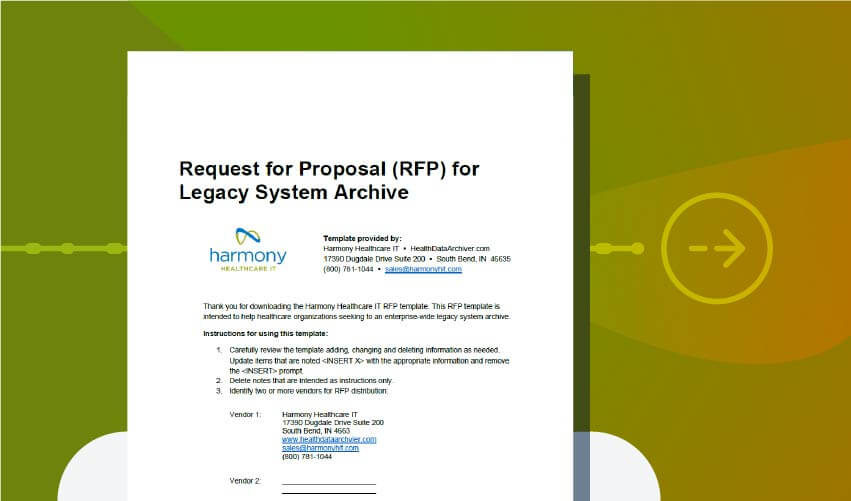
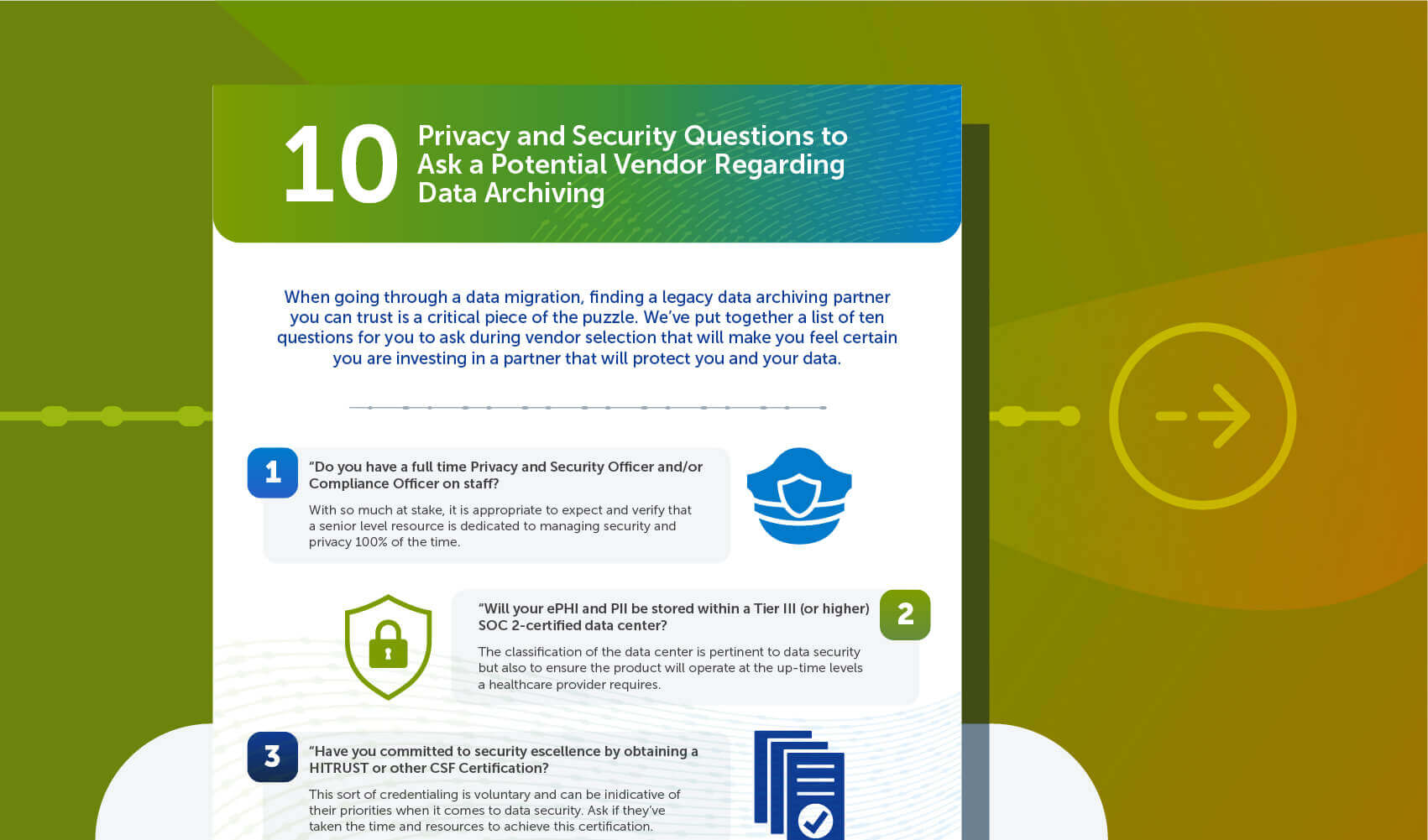
Explore resources, including a MEDITECH case study and a security/privacy checklist for choosing a vendor.